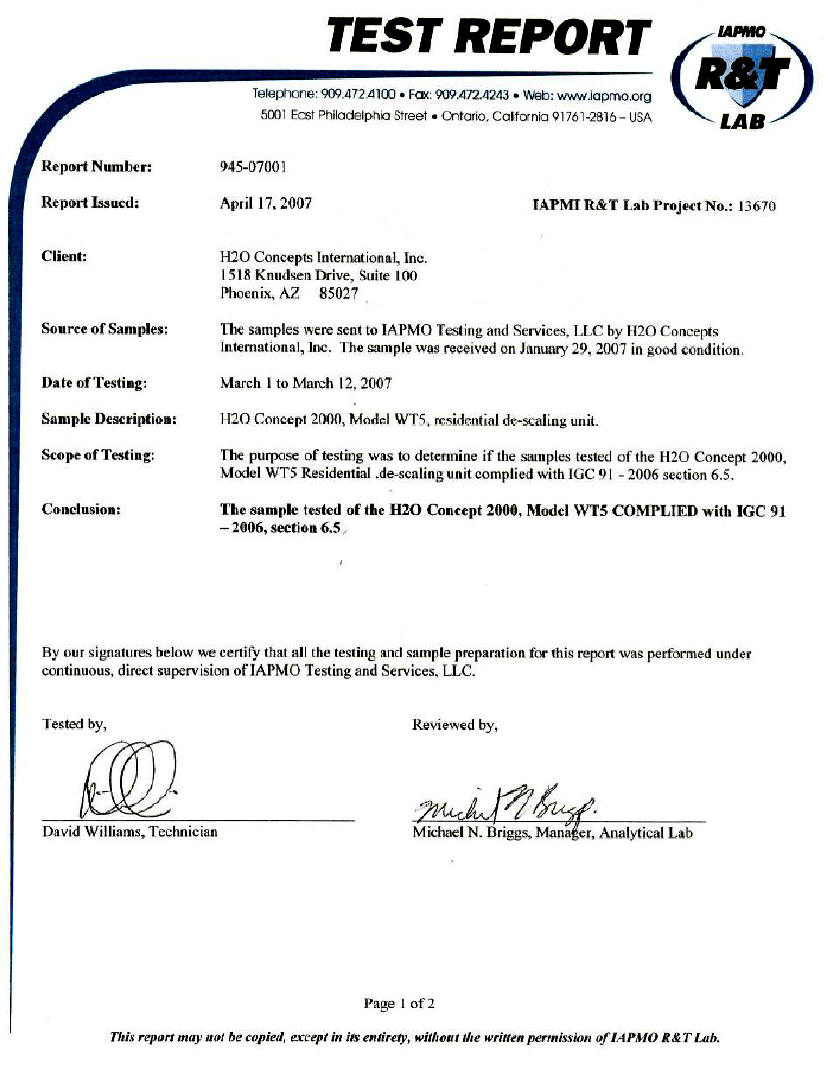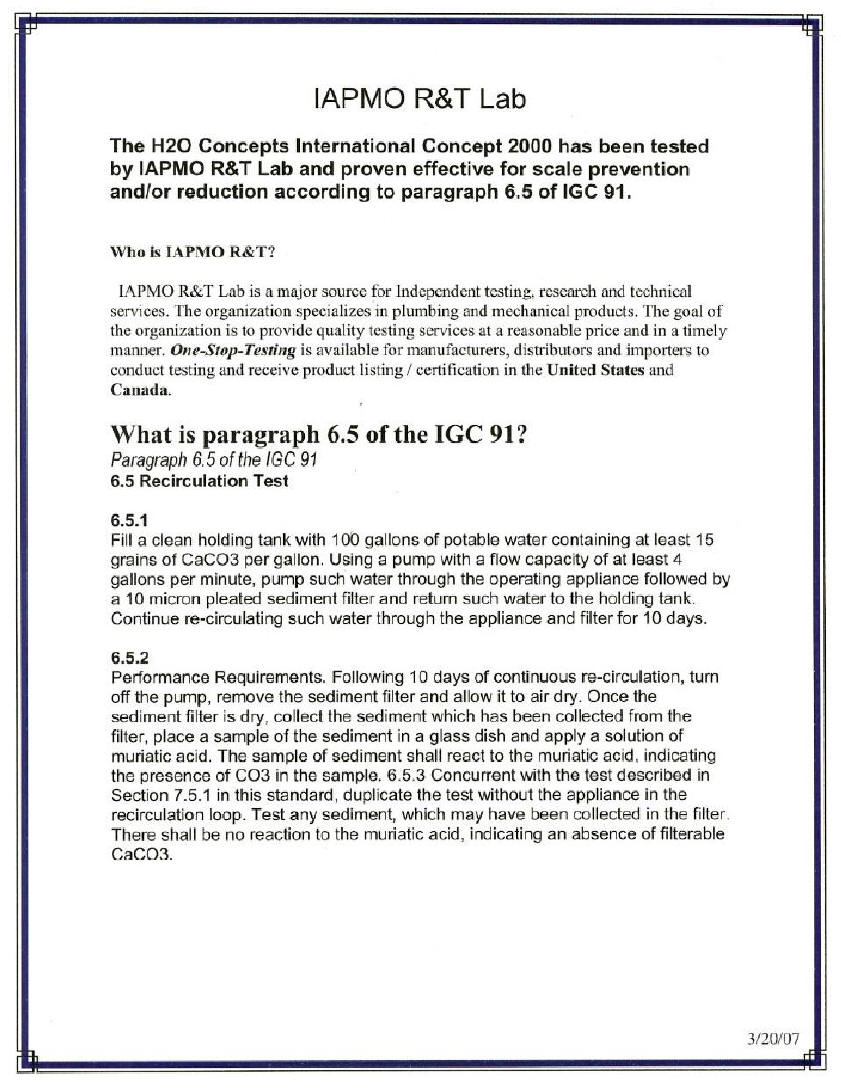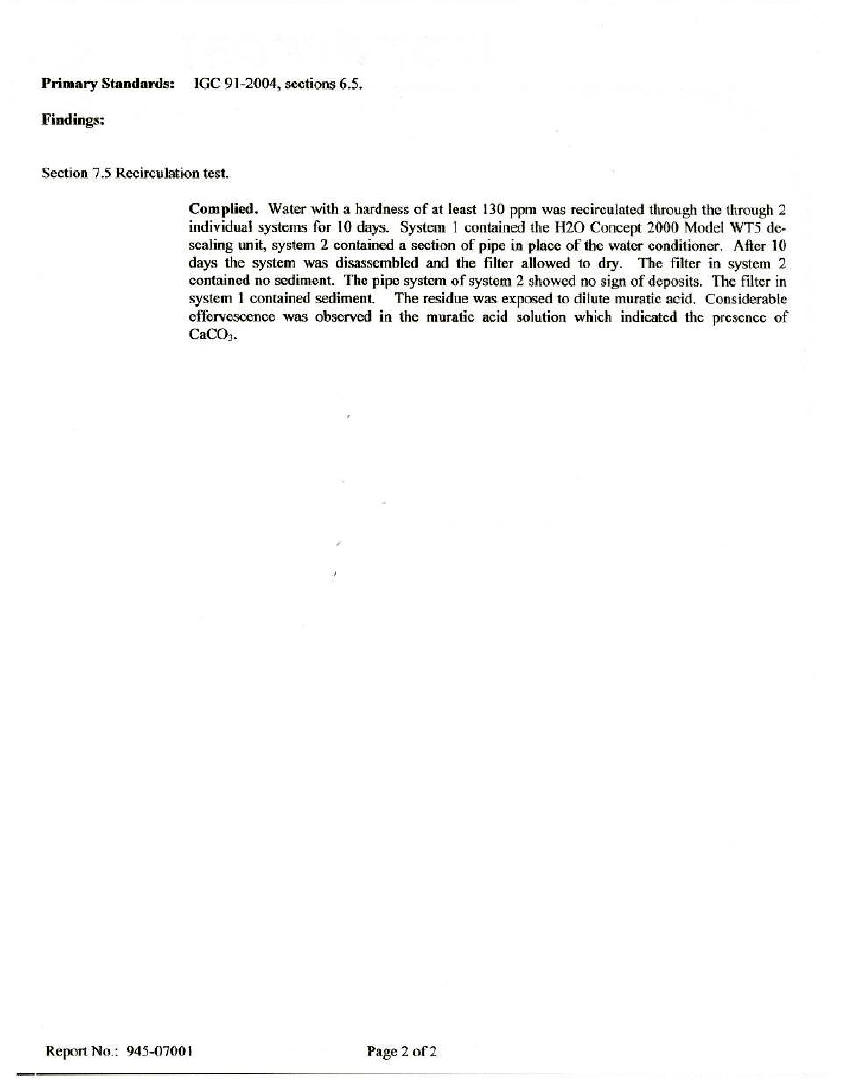
Instead of exchanging the calcium and magnesium bicarbonate for sodium
or potassium (ion exchange) like a water softener, Impulse Technology
concentrates on the bicarbonate crystals of the minerals. In their bicarbonate
form, these minerals form on one another causing buildup in plumbing and
premature failure of water using appliances.
Calcium and magnesium bicarbonate crystals are insoluble, but can be
changed by temperature (energy) into the soluble form of carbonate crystals.
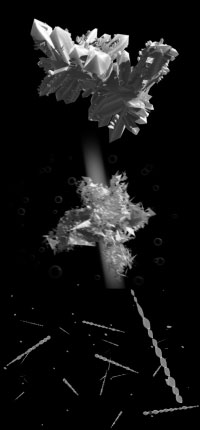
Calcite is a type of calcium carbonate crystal that is soluble and has a
rhombohedral (dog-tooth like) shape. These crystals are small, very adherent and still create deposits in plumbing and fixtures. Typically, boiling water will convert bicarbonate crystals to this form of carbonate crystal. An example would be the hard-to-remove white residue left inside a pan when water is boiled down on a stove.
Aragonite is a type of calcium carbonate that is soluble and has an acicular
(needle like) shape. These crystals are very small, but not adherent. It is this
non-adherent form that is created by the AMPFORCE™ Technology.
The system sends a computer-controlled high frequency between 2300
and 4100 times per second (a positive and negative low voltage impulse
between a stainless steel anode and cathode). The frequency, voltage and
amperage required depend on the hardness and the flow of the water.
AMPFORCE™ Technology controls the form of the frequency into the water,
which ensures the change from calcium bicarbonate to calcium carbonate
and into the non-adherent crystals. This formed frequency, the voltage and
the amperage are precisely calculated so that the stainless steel anode,
cathode and the water are completely stabilized (neutral).